Everyone can buy AI now.
Deciding what's worth building is the hard part.
Most businesses now hold the same AI the largest firms use. Very few have someone who can tell them what to build with it — what's worth doing, in what order, and what to leave alone. I work with a handful of established businesses in person, on site, to make those decisions well and see them through. That is all I do.
57% → 25%.
The share of businesses that call AI central to their growth, against those who have actually put it to work. Belief is settled. Execution is the opening.
— Vi Business MSME Growth Insights Study, 2026
Nearly 2×.
Businesses that adopt AI are close to twice as likely to report year-on-year growth, and 91% of those using it say it has lifted revenue. The upside is no longer theoretical.
— Salesforce Small Business Trends, 2025
95%.
The share of AI initiatives that deliver no measurable return — and the cause is the approach taken, not the technology itself. The tools rarely fail. The way they're applied does.
— MIT, State of AI in Business, 2025
78%.
The proportion of businesses now placing operational efficiency above revenue growth as their first priority. The appetite is not in question.
— CyberMedia Research, 2026
Tools are now abundant.Judgment is not.
Generic AI is powerful, and blank. It knows almost everything — except your products, your people, your numbers, and what “good” looks like inside your business. The research is unambiguous: where AI fails, it fails on the decision of what to build, not on the model. Choosing the right thing to build, sequencing it, and knowing what to refuse — that is a different skill entirely. It is the whole of what I do.
The AI expertise you need,without the hire.
A capable AI lead is expensive, hard to find, and harder to keep — and most established businesses don't need one full-time. I fill that role from the outside. I set the direction, decide what's worth building, and give you a clear picture of where your company should be with AI in one year and in three. You get the judgment of a senior AI hire and a vision to steer by, without the cost, the search, or the risk of carrying the headcount.
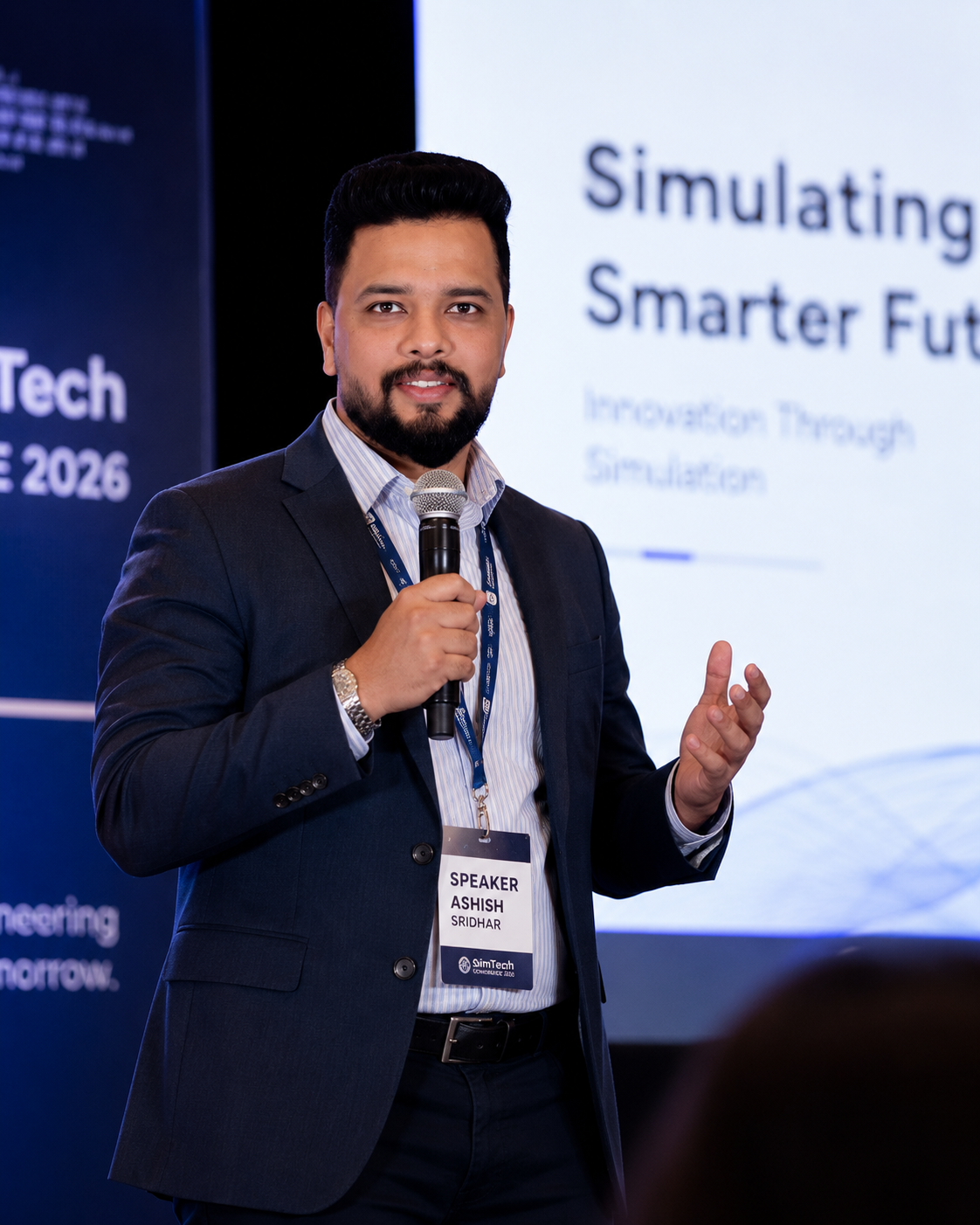
A doctorate in the science. A career building the tools.One agenda — yours.
For over a decade I have led enterprise engineering and simulation software relied upon by some of the world's largest companies across Europe and the United States. My doctorate is in computational science — the mathematics beneath modern AI, not a strategy deck's version of it. I bring that same standard to businesses here, in person, without the enterprise price or the vendor's agenda.
My work answers to one test — whether it earns its place in your business.
It begins with a conversation, in person.
AI moves fast, and tracking it is a full-time job in itself. Businesses bring me in so it isn't theirs. I stay close to what is changing, decide what is actually worth their attention, and guide them through it at a pace that fits. They stay focused on what they do best. I make sure they build the right things — and don't fall behind.
Clarity.
I sit with you on site and learn how the business genuinely runs. Then I tell you plainly where AI creates real value for you right now, where it does not, and what to do first. No hype, no guesswork — a clear reading of the ground before anything begins.
The plan.
A practical roadmap: what to build, in what order, sequenced so each step proves itself in weeks rather than quarters. You see the whole picture before we commit to anything — and you decide what goes ahead.
Getting it built.
Some of the work I build with you directly. For the larger pieces, I help you find and hire the right external vendors — and then oversee them, so the work matches the plan and you're never left managing specialists you can't yet evaluate. Because I stay close month after month, each cycle compounds on the last, and the judgment ends up in your team, not locked inside me.
I work with a few businesses closely, not many lightly.
This is for you if —
You lead an established business and treat AI as a serious lever, weighed like any capital decision.
You want it done properly and built to last — not a demo that impresses in the room and stalls a month later.
You'd rather have one trusted expert deciding what to build and standing behind it than manage a shelf of tools and vendors.
You expect your data, your methods, and your people to be protected.
Where we usually begin.
- —
"How can a small manufacturing business in India use AI without hiring a full-time data science team or buying expensive software?"
- —
"My competitors say they use AI but I think it's just marketing — how do I tell what's real and what actually gives ROI for an SMB?"
- —
"Is my company data safe if my staff start using ChatGPT for quotations and customer emails, and how do I control this?"
- —
"How to use AI for GST reconciliation, purchase orders and vendor follow-ups in a small Indian company without changing my ERP?"
- —
"We get 200 WhatsApp enquiries a day and lose track of many — can AI help my sales team follow up automatically?"
These are the kinds of small, visible wins we usually begin with — not because they're the point, but because they earn the trust to do the deeper work. The transformation compounds from there.
I don't recommendwhat I haven't built.
Everything below I have built myself — at Siemens and under my own name. That is the only standard I work to: if I recommend it, I have done it. The gap between owning AI and getting real results is one I close in practice, not in theory.
Enterprise LLM work at Siemens.
At Siemens I led multiple LLM projects across the organisation — including an internal help chatbot, a dedicated MCP server, and a range of AI-augmented engineering workflows. Enterprise-scale delivery, with the constraints, accountability, and security requirements that serious industrial businesses demand.
This website. Built overnight. With AI.
Every word, every layout decision, every line of code on this page was produced in a single evening, using the exact tools you already have. I know precisely where the gap between owning AI and getting results lies, because I close it myself.
In my own business.
I co-founded and run a consumer brand, and built the AI systems behind much of its content, operations, and day-to-day decisions. I don't recommend anything I haven't first trusted with my own name and my own money.
Marketing material, from weeks to same-day.
For an established business, I redesigned how marketing and posters were produced across multiple languages — work that took about a month now turns around in a fraction of the time, without adding headcount.
Lead discovery, done in a fraction of the time.
For the same business, I rebuilt outbound lead discovery around AI — vetting prospects that were previously found by hand, freeing the team to spend their hours on the leads that matter.
Frequently asked questions
You may becloser than you think.
A single, unhurried conversation — no pitch, only a clear view of where AI belongs in your business, and where it does not.
I work with a small number of businesses at a time, in person.